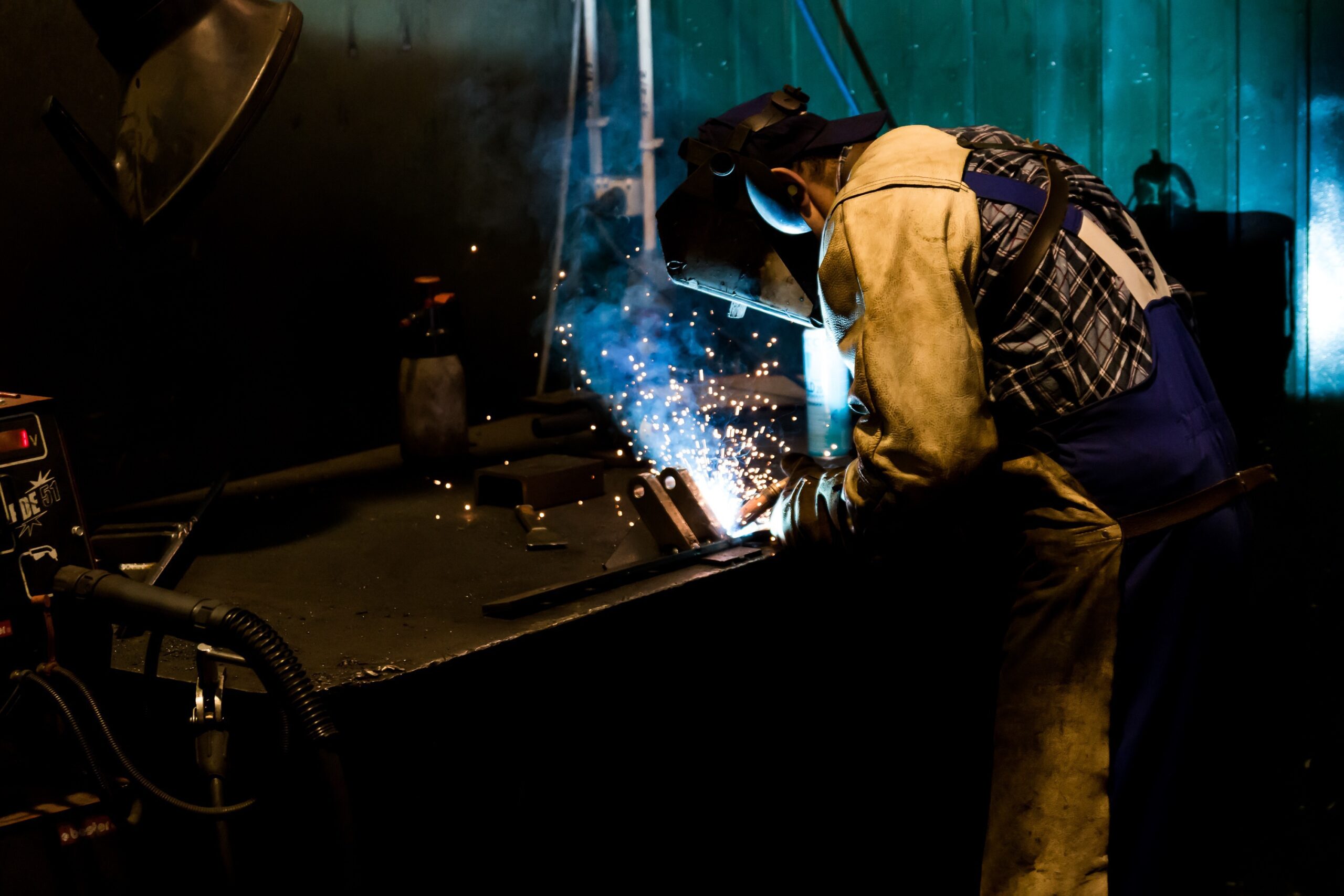
Not every metal job needs to go back to a workshop. A broken gate hinge, a cracked railing post, a steel beam that needs a bracket welded on, a shutter guide that has been hit by a van. In many of these cases, the quickest and cheapest fix is to bring the welder to the job.
At East London Metal Engineering Ltd we offer on site fabrication services across London from our workshop in Forest Gate, E7. Here is when on-site welding makes sense, when it doesn’t, and what to expect on the day.
What on-site welding and fabrication covers
On-site work means we bring a mobile welding set, cutting and drilling tools, and the steel we need, and do the job where the metalwork already stands. Typical jobs include:
- Repairing gates that have dropped, cracked at the hinge or come off their track
- Fixing broken railings, balustrades and handrails, including replacing damaged bars or posts
- Welding brackets, plates and cleats onto existing structural steelwork
- Repairing roller shutter guides, bottom rails and frames
- Altering metal doors, grilles and security bars to fit new openings
- Making small changes to staircases, such as adding a handrail or extending a landing
- Emergency repairs after break-ins or vehicle damage
Some jobs are a mix. We often measure on site, make the new part in the workshop, then go back and weld it in place.
When on-site work is the better choice
The item can’t easily be removed
Gate posts set in concrete, railings fixed into stone walls, steel beams holding up part of a building. Taking these out to repair them is slow, messy and expensive. Welding them in place keeps the job small.
Security is at risk
If a shop front shutter or a warehouse gate is broken, the building may be left open overnight. A same-day site visit can get it locked again, even if a full repair or replacement follows later.
The fix is quick
Many repairs take an hour or two of welding. Paying for collection, workshop time and re-fitting would cost more than the repair itself.
Measurements have to be taken from the real thing
London buildings are rarely square. When a new section has to match an old railing or a sloping wall, fitting and welding on site gives a much better result than working only from drawings.
When the workshop is still the right place
On-site welding is useful, but it isn’t the answer to everything. We will usually recommend workshop work when:
The item needs a full finish. Powder coating can only be done in a coating facility. On site, welds are cleaned and touched up with paint, which is fine for repairs but not for new work that needs to look perfect. For a full finish, see our powder coating services.
The job is large or detailed. New gates, staircases and long runs of railings are better made under controlled conditions, then installed. Our custom metal fabrication work is all done this way.
The steel is badly corroded. If rust has eaten through the metal, welding new steel to it won’t last. Replacing the section is usually better value.
Fire risk is too high. Some sites, such as timber-framed buildings, fuel stores or busy kitchens, may not allow hot works at all, or only with strict controls.
Safety and permissions for hot works
Welding, cutting and grinding are known as hot works, and they need proper planning, especially in occupied buildings. On commercial and managed sites, the building owner or main contractor will often ask for a hot works permit before we start. On a typical job we:
- Check the area for anything that could catch fire and move it or cover it with fire blankets
- Keep a fire extinguisher at the work area
- Screen the welding area to protect people nearby from sparks and arc flash
- Carry out a fire watch after the work is finished, as many permits require
- Agree working times with you, so noise and fumes don’t clash with customers, staff or neighbours
Galvanised steel needs extra care. The zinc coating has to be ground back before welding, and the weld is then treated with zinc-rich paint so the repair doesn’t become a rust spot.
A real example
One of our commercial customers had two old palisade swing gates and wanted a single automated sliding gate instead. The job needed a ground track laid, electrics connected, safety sensors fitted and welding done on site, plus a new sliding gate motor with app-based access control. In their Google review, the customer said the whole job was finished in just over a day. Being able to cut, fit and weld on site, with the main parts made in our own workshop, kept the disruption short.