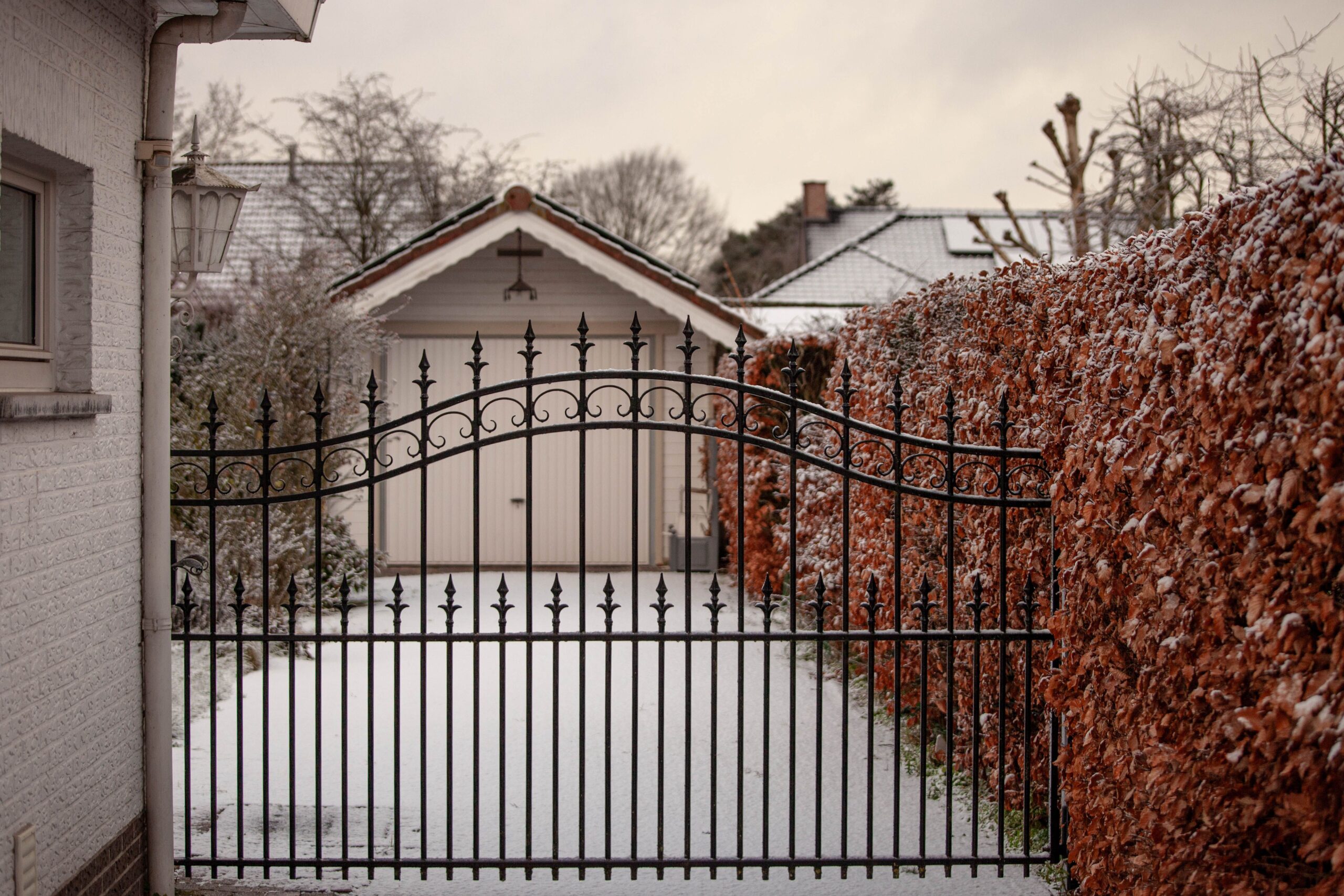
If you’ve searched for electric automatic gate prices before landing here, you’ve probably already found five different websites quoting five different numbers. £2,000. £5,000. £15,000. All technically correct, all pretty useless on their own.
Here’s why the range is so wide, and why London makes it wider still: two identical-looking gates can cost completely different amounts once you factor in what’s actually happening at ground level the driveway, the power supply, the pillars, and whether your street even lets you swing a gate outward in the first place. We’re East London Metal Engineering, and we design, fabricate, and install these systems ourselves rather than buying in flat-pack kits, so this is written from the workshop and the job site, not a pricing spreadsheet.
Why UK-Wide Price Guides Don’t Quite Fit a London Job
Most cost guides are written for a national audience, which means they average out a semi-detached house in Cheshire with a Victorian terrace in Leyton. Those are not the same job.
A lot of London properties were built before cars existed, let alone electric gates. Driveways are narrower, pillars are often original brick that’s a hundred years old and not going to take a modern motor’s mounting bracket without reinforcement, and the electricity supply might be in the house rather than anywhere near the front boundary. None of that shows up in a generic “£3,000–£8,000” range but it shows up on your invoice.
London labour rates, parking suspensions, and skip permits also push installation costs toward the upper end of most UK guides rather than the middle. It’s worth knowing that going in, so a quote that looks “high” against a national average article isn’t actually out of line for the area.
What You’re Actually Paying For
An electric automatic gate isn’t one product it’s four separate cost centres bundled into one quote. Understanding them makes it much easier to compare quotes properly, because two installers can hit the same total price by very different routes.
The gate itself. A single aluminium swing gate typically sits around £1,500–£3,000 supplied. Steel is similar or slightly less, wrought iron and hardwood timber both run higher often £3,000–£6,000+ for the leaf alone once you add scrollwork or a bespoke design. Sliding gates cost more than swing gates of the same width because they need a full-length steel frame rather than a simple leaf.
The automation. The motor, control board, and safety electronics generally add £1,000–£3,500. Underground motors cost more than above-ground ram or articulated-arm systems but leave no visible hardware, which matters on period properties where a chunky above-ground motor looks out of place.
Installation and groundworks. This is where London jobs diverge most from the national average. Running a new armoured power cable from the house to the gate, breaking out and re-pouring a section of driveway for a sliding track, or rebuilding a crumbling brick pier so it can safely take a motor’s load each of these can add £1,000–£3,000+ on its own. On a straightforward job with an existing power supply and solid pillars, installation can be closer to £1,500.
Safety and access extras. Photocell safety beams and force-limiting sensors aren’t optional add-ons they’re what stops a gate becoming a hazard, and any installer worth hiring will build them into the base quote, not sell them as an upsell. Intercoms, keypads, and smartphone/Wi-Fi control typically add £300–£1,200 depending on how far you want to go.
Put together, most London homeowners land somewhere between £4,500 and £11,000 for a fully supplied, installed, and compliant single-property system with straightforward aluminium swing gates at the lower end and bespoke sliding or bi-fold gates on tighter commercial sites at the top.
A Real Example: Why Two Same Size Gates Priced £3,000 Apart
We’re not going to invent a client story with a name and a testimonial quote, because that’s not something we can verify for you but here’s a scenario that plays out often enough to be worth describing honestly.
Picture two nearly identical driveways in East London: same width, same style of gate requested. On the first, the existing brick pillars are sound, there’s already a power supply run to an outbuilding nearby, and the driveway is flat. On the second, the pillars need partial rebuilding to take the motor mounts safely, the nearest power point is inside the house thirty metres away, and the driveway slopes toward the road. The gate itself might be identical on both quotes. The difference often £2,500 to £3,500 is entirely in what’s under the ground and behind the wall. This is exactly why a phone quote based on “I want a gate like the one three doors down” is never reliable, and why we always survey before pricing.
Swing, Sliding, or Bi-Fold: Which Actually Suits a London Plot?
Swing gates are the cheapest to automate because the mechanism is simpler, but they need clearance to open into the driveway or out toward the pavement. On a lot of London frontages, there isn’t room for either without planning issues or blocking your own car.
Sliding gates run along a track instead of swinging, which is why they’re the most common choice we install across East and North East London. No arc of clearance needed, better suited to sloped driveways, and generally considered more secure for commercial sites because there’s more gate-to-frame contact when closed.
Bi-fold gates fold in on themselves and open fast, which is why you’ll mostly see them on industrial units and warehouse yards rather than homes speed of access matters more than aesthetics on a busy commercial entrance.
If your driveway is under roughly 4 metres deep or slopes noticeably, sliding is almost always the more practical (and eventually cheaper, once you account for wasted swing-gate clearance issues) choice.
The Planning Permission Question People Forget to Ask
Most electric gates don’t need planning permission but there are two situations where they do, and they catch people out regularly in London specifically:
If your gate opens directly onto a public highway or pavement and would be higher than 1 metre, you’ll generally need planning permission, because it can’t swing into a public right of way. Anywhere else on the boundary, the threshold is usually 2 metres. If your property is in a conservation area or is listed, the rules tighten further, and London has a lot of both.
This is a five-minute check with your local council’s planning portal before you commit to a design far cheaper than finding out after the pillars are built.
What a Proper Quote Should Include
A quote that only lists “gate + motor” is missing the parts that actually keep you safe and out of trouble later. Before you accept anything, it should clearly itemise:
- Force-limitation testing on the motor, so the gate can’t crush an obstruction
- Photocell or safety-edge sensors covering the closing path
- A compliant electrical connection, not a temporary extension lead run through a hedge
- What happens in a power cut battery backup, manual release key, or both
- What’s covered under warranty, and for how long
If a quote is dramatically cheaper than everything else you’ve received, one of these is usually what’s been left out.
Ongoing Costs (The Part People Underestimate Least, Then Forget)
Running an electric automatic gate is cheap day to day typically £15–£20 a year in electricity for a domestic gate used several times daily. Annual servicing is the bit worth budgeting for properly: £150–£300 a year keeps hinges, motors, and sensors in check and catches small faults before they become a seized gate at 7am on a work day.
How We Approach a London Job
Because East London Metal Engineering fabricates gates in-house rather than reselling a catalogue product, the quote you get reflects your actual driveway, not a generic template. A site survey and CAD drawing come before any price is finalised, so you see exactly what’s being built and why the pillars, power run, or track need what they need no surprises once work starts.
A Few Quick Answers
Is sliding always more expensive than swing?
For the same gate width, usually yes but if your driveway can’t accommodate a swing arc without planning issues, sliding often works out cheaper overall once you account for what a swing gate would need in extra groundwork.
Can existing manual gates be automated instead of replaced?
Often, yes, provided the gate and pillars are structurally sound enough to take a motor’s load worth a survey rather than assuming either way.
How long does installation typically take?
A straightforward domestic job is usually 1–3 days on site once groundworks and any pillar rebuilding are accounted for; commercial sliding systems can take longer depending on track length.
If you’d like an accurate figure rather than a range, the only way to get one is a site visit driveway shape, existing power, and pillar condition all change the number. East London Metal Engineering surveys, designs, and fabricates every gate to the property it’s going on, based out of our workshop at Arch 379, Station Road, London E7. Get a quote or call us on 079 5167 3924.