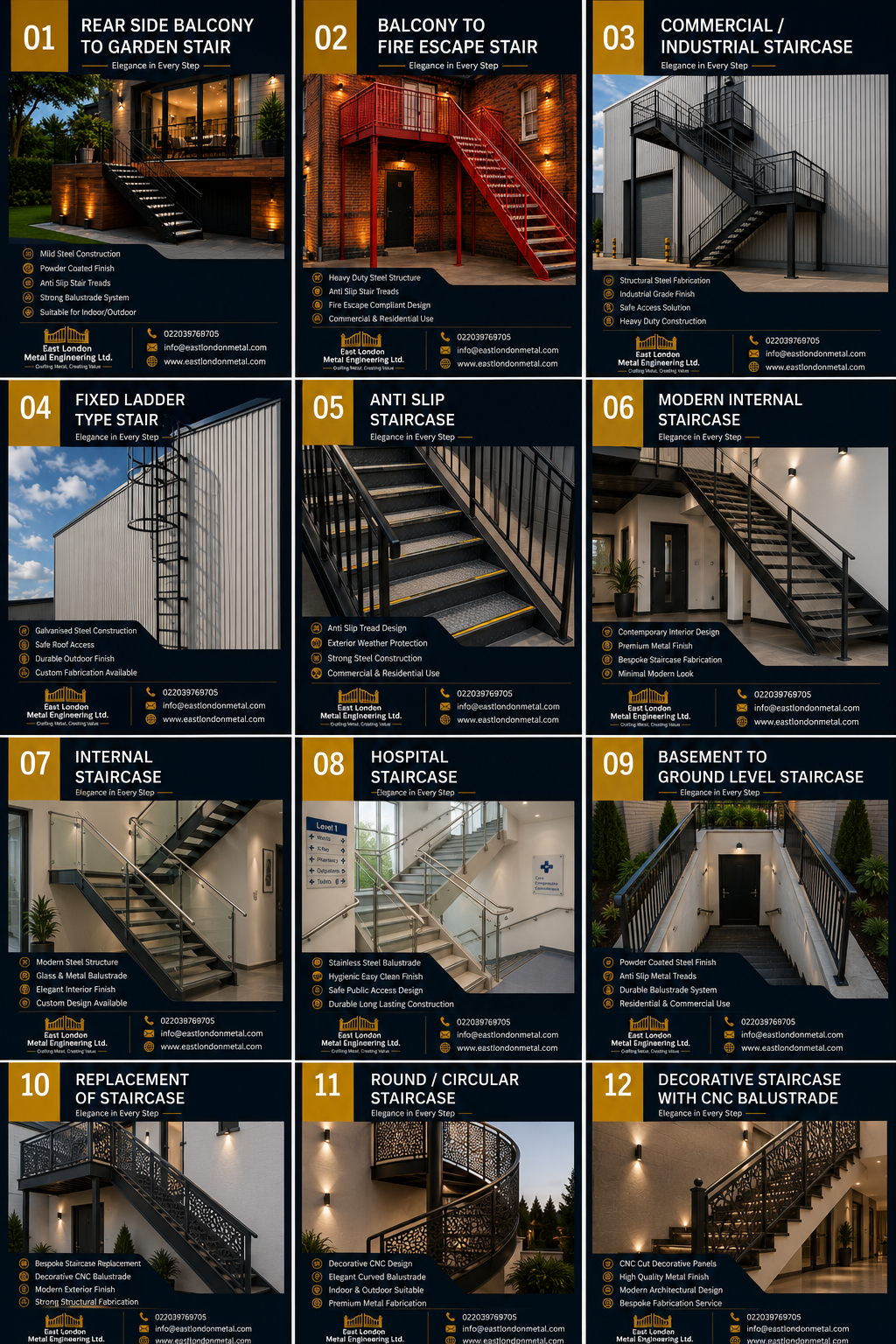
01. Rear Side Balcony to Garden Stair
Key Design Considerations
External balcony staircases must comply with UK Building Regulations Part K regarding safe access, stair geometry, guarding, and handrail safety. Proper structural fixing to existing buildings and corrosion-resistant finishes are essential for long-term durability.
Technical Requirements
- Maximum rise: 220mm
- Minimum going: 220mm
- Balustrade minimum height: 1100mm
- Maximum baluster gap: 100mm
- Anti-slip stair tread surface recommended
- Hot-dip galvanised or powder-coated finish for weather protection
Common Construction
- Mild steel stringers
- Steel box section balustrade
- Chequer plate or grating treads
- Chemical anchor fixing system
Suitable Applications
- Residential rear access
- Garden stair connections
- Raised terrace access
- Balcony escape routes
02. Balcony to Fire Escape Stair
UK Fire Escape Compliance
Fire escape staircases must maintain safe emergency egress routes in accordance with Approved Document B and Part K of UK Building Regulations. Stair width, handrails, landing dimensions, and anti-slip finishes are critical safety requirements.
Technical Requirements
- Minimum clear width typically 800mm–1000mm
- Continuous handrail system
- Non-combustible steel construction
- Anti-slip treads mandatory
- Minimum 1100mm guarding height
- Safe landing transition areas
Recommended Materials
- Galvanised mild steel
- Steel mesh or perforated anti-slip treads
- Fire-resistant powder coating system
Ideal For
- Apartment buildings
- Schools
- Commercial units
- Mixed-use developments
03. Factory / Commercial / Industrial Staircase
Industrial Safety Standards
Industrial staircases are designed for heavy-duty usage and must comply with workplace safety regulations, loading requirements, and safe access standards.
Typical Features
- Heavy-duty steel frame
- Industrial anti-slip treads
- Large platform landings
- High-load structural support
- Safety kick plates and handrails
Technical Standards
- Uniform rise and going dimensions
- Load-bearing calculations
- Durable industrial coating systems
- Welded steel construction
Common Applications
- Warehouses
- Manufacturing facilities
- Industrial plants
- Commercial service areas
04. Fixed Ladder Type Stair
Access & Maintenance Safety
Fixed ladder systems are commonly used for maintenance access and restricted service areas. Safety cages and fall protection systems may be required depending on height and usage.
Technical Requirements
- Galvanised steel ladder system
- Safety hoop cage (where required)
- Non-slip rungs
- Secure wall fixing brackets
- Roof edge compliance
Applications
- Roof access
- Plant rooms
- Industrial maintenance access
- Service platforms
05. Anti-Slip Staircase
Slip Resistance & Public Safety
Anti-slip stair systems help reduce slip hazards in wet or industrial environments and are commonly required for external and public-use staircases.
Recommended Stair Finishes
- Steel chequer plate
- Serrated grating treads
- Resin anti-slip coating
- GRP anti-slip nosing
UK Compliance
- Part K Building Regulations
- Workplace Health & Safety requirements
- Slip resistance considerations for external staircases
Ideal For
- Fire escapes
- External stairs
- Industrial facilities
- Public access areas
06. Modern / Traditional Staircase Balustrade
Architectural & Safety Balance
Balustrade systems must provide both visual appearance and fall protection while maintaining compliance with UK guarding regulations.
Technical Requirements
- Minimum guarding height 900mm–1100mm
- Maximum opening gap 100mm
- Structural fixing compliance
- Continuous handrail support
Available Styles
- Minimal modern steel bars
- Traditional decorative metalwork
- Glass and steel combinations
- CNC decorative panels
07. Hospital Staircase
Healthcare Environment Standards
Hospital staircases require durable, hygienic, and easy-maintenance finishes suitable for high public usage.
Recommended Construction
- Stainless steel handrails
- Slip-resistant stair treads
- Easy-clean finishes
- Smooth edge detailing
Key Safety Features
- Continuous handrails
- Visual step contrast
- Non-slip surfaces
- Accessibility compliance considerations
08. Replacement of Staircase
Structural Upgrade & Safety Improvement
Replacing old staircases improves structural safety, modern compliance, and visual appearance.
Typical Process
- Existing stair removal
- Site survey & structural checks
- New steel fabrication
- Installation & alignment
- Final protective finish
Benefits
- Improved safety compliance
- Stronger structural system
- Modern appearance
- Reduced maintenance
09. Round / Circular Shape Stair
Space Efficient Architectural Staircases
Spiral and circular staircases provide compact access solutions while creating strong visual impact.
Technical Considerations
- Centre column support system
- Step width consistency
- Balustrade curvature alignment
- Safe tread geometry
Common Applications
- Residential feature stairs
- Roof terrace access
- Duplex apartments
- Architectural entrances
10. Decorative CNC Design Balustrade
Bespoke Architectural Metalwork
CNC laser-cut balustrades combine safety and decorative design for modern architectural projects.
Fabrication Process
- CAD design preparation
- CNC laser cutting
- Steel fabrication
- Powder coating finish
Design Options
- Geometric patterns
- Arabic decorative panels
- Modern abstract designs
- Custom architectural motifs
11. Floating Type Stair
Contemporary Structural Stair Design
Floating staircases create a minimalist appearance using concealed steel support systems.
Key Engineering Considerations
- Structural wall support
- Hidden steel brackets
- Load-bearing calculations
- Balustrade integration
Common Finishes
- Powder-coated steel
- Timber stair treads
- Glass balustrades
- Stainless steel details
12. Basement to Ground Floor Staircase
Safe Basement Access Design
Basement staircases require proper drainage, guarding, anti-slip surfaces, and weather-resistant materials for safe external access.
Technical Requirements
- Minimum 1100mm guarding height
- Anti-slip stair treads
- Drainage channel at basement level
- Weather-protected steel finish
- Continuous sloped handrail system
Recommended Construction
- Mild steel staircase
- Steel vertical balustrade
- Powder-coated finish
- Chequer plate treads
Suitable For
- Residential basement access
- Commercial lower-ground access
- Lightwell stair systems
- External service access stairs